

Freestyle kayaking
Born in the early 1990s in the United States, this discipline has been part of the ICF (International Canoe Federation) since 2007. World Championships are held every two years, alternating with World Cups.
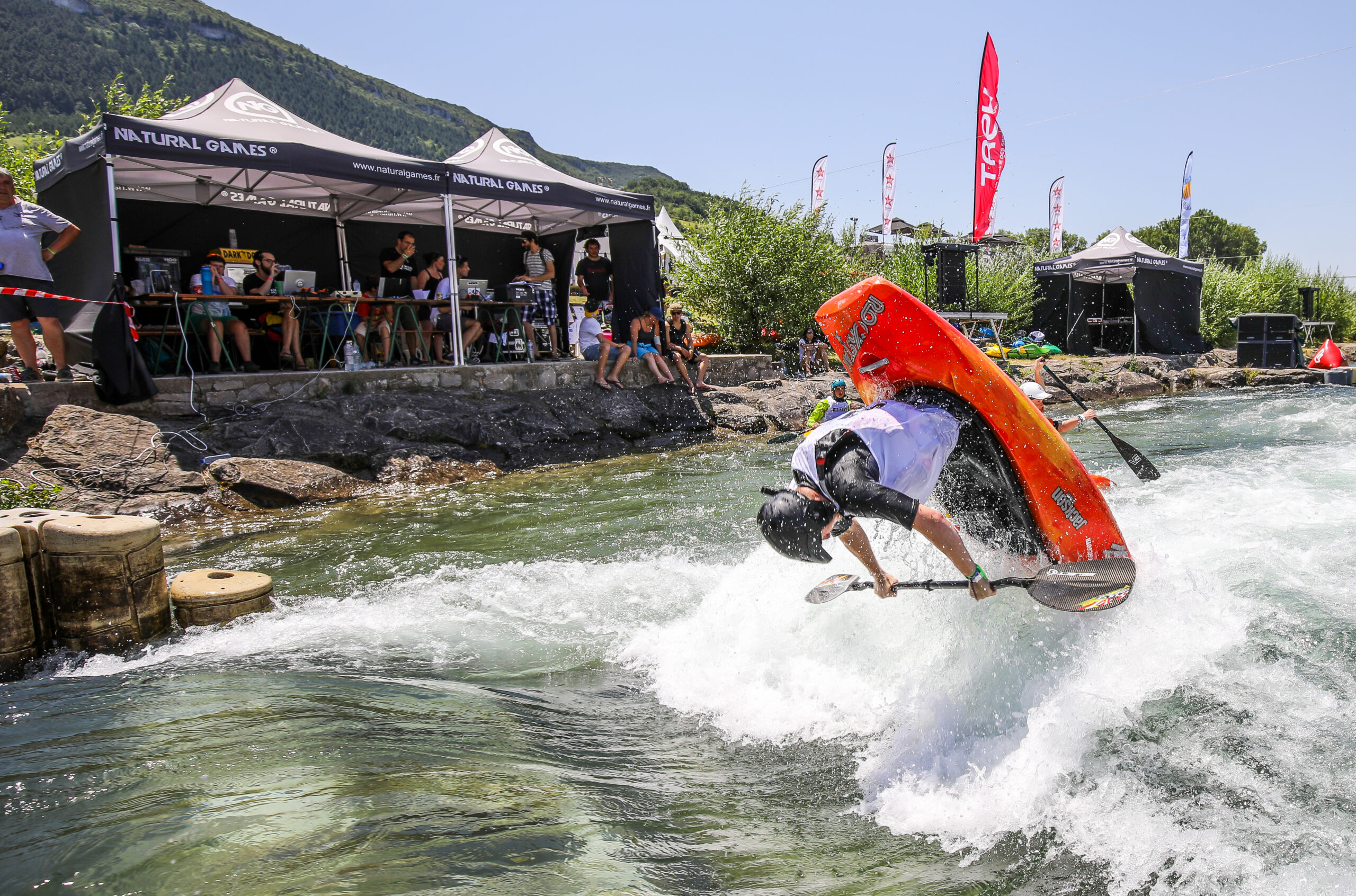
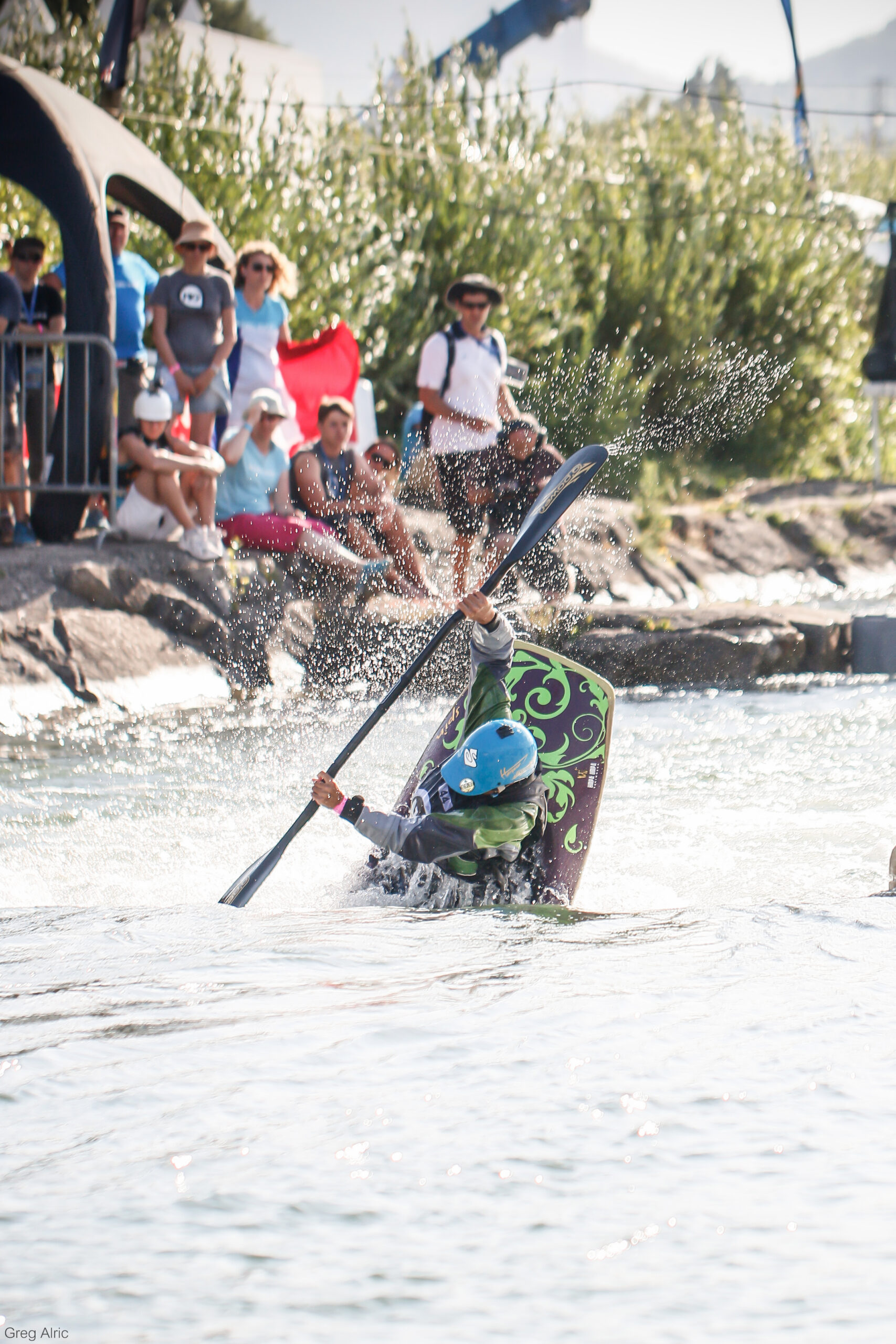
Freestyle kayaking involves performing acrobatic moves in whitewater using a kayak, canoe, or open canoe. This discipline is practiced on specific sections of rivers called “spots,” which feature massive waves or powerful holes. France boasts stunning spots like Hawaï-sur-Rhône in Lyon or La Malate in Besançon.
The goal is to score as many points as possible in a 45-second “ride” on a wave or hole, under the watchful eyes of judges. The moves are codified and scored based on their difficulty in both vertical and horizontal execution, as well as the amplitude and style of the paddler. The harder the move, the more points it earns.
Competitors perform as many moves as possible within their ride. The best athletes execute up to 14 or 15 moves per run—almost one move every 2 seconds!
Competitions consist of several rounds, from qualifying heats to the final. Each time, only a fraction of the competitors advance until just five finalists remain.
Beyond the competitive scene, there’s also a quest for performance in what are called “free sessions,” focusing on style, air, or links.
Boats:
Freestylers use very short, but relatively wide boats (about 1.8 meters long and 65 centimeters wide) with high volume at the front and back. The hull and volume distribution are designed so the boat can surf river waves and follow the currents and impulses of the paddler, enabling rotations and tricks.